Kilimanjaro the highest mountain in Africa
Kilimanjaro the highest mountain in Africa : Mount Kilimanjaro, Africa’s tallest mountain, offers an incredible thrill for those who reach the heights of the Ultimate Kilimanjaro, a legendary natural marvel that looms over northeastern Tanzania. Soaring to a remarkable height of 19,341 feet (5,895 metres), it is not only the tallest mountain in Africa but also the highest freestanding mountain globally. Kilimanjaro consists of three notable volcanic cones: Kibo, Mawenzi, and Shira. Of these routes, Kibo ascends to Uhuru Peak, the highest point in Africa at an elevation of 5,895 metres. With the base of the mountain lying at around 1,000 metres, there is a striking elevation gain of almost 4,900 metres to reach the peak. Kilimanjaro encompasses five distinct ecological zones, from the lush rainforests at lower elevations to the alpine desert conditions near the summit. Each zone presents unique challenges and stunning views shaped by factors such as altitude and climate.
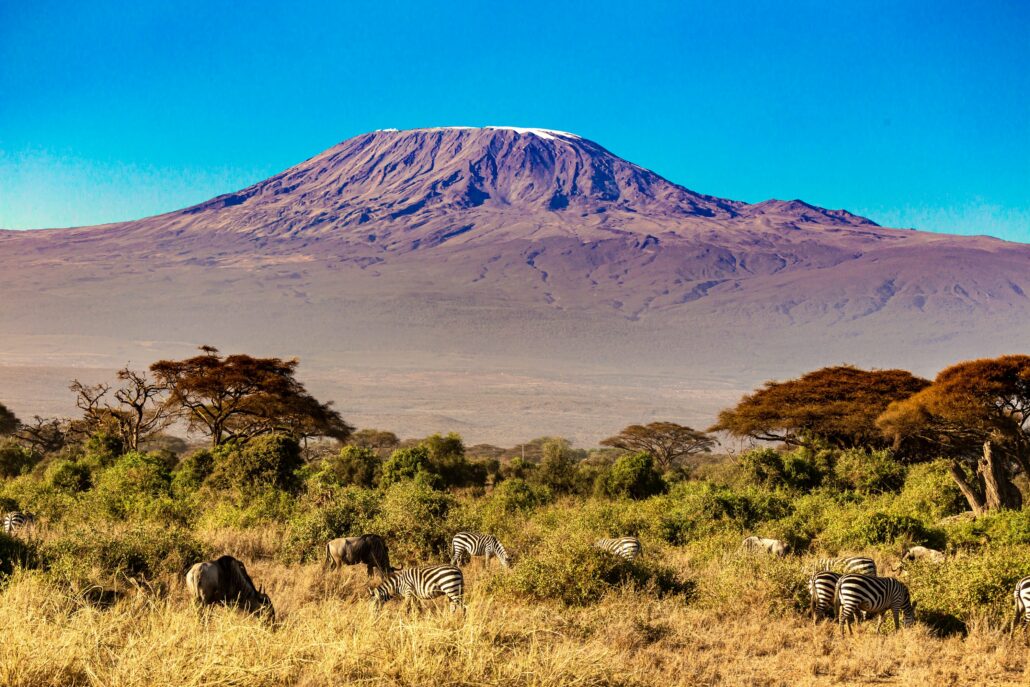
Each year, around 30,000 climbers are attracted to Kilimanjaro, traversing diverse terrain that requires endurance, acclimatization, and a sense of adventure. Climbers usually take five to nine days to reach the summit, which gives them time to acclimatize and counteract the effects of diminished oxygen levels. With geographical coordinates of roughly 3.0674° S and 37.3556° E, the mountain is situated close to the equator. The Ultimate Kilimanjaro, with its rich biodiversity and unique flora and fauna found at different elevations, offers stunning landscapes and an unforgettable journey that beckons adventurers to conquer its heights and experience the unparalleled beauty of this majestic peak.
What is the height of Mount Kilimanjaro?
With an elevation of 19,341 feet (5,895 metres) above sea level, Mount Kilimanjaro is the highest mountain in Africa and the tallest freestanding mountain globally. Its remarkable elevation enables it to stand out vividly from the adjacent Tanzanian plains, aiding in its recognition as an international landmark. The mountain’s elevation is important not just for climbers targeting the peak, but also for the various ecosystems and climatic zones that are found at different heights.
Kilimanjaro is made up of three volcanic cones: Kibo (the highest), Mawenzi, and Shira. Depending on the selected route, like the Machame or Lemosho trail, the climb to Uhuru Peak on Kibo usually takes five to nine days. It is vital for proper acclimatization to ascend gradually, as this helps lower the risk of altitude sickness, which affects almost 20% of climbers at heights exceeding 2,500 meters.
In 2022, roughly 30,000 climbers sought to reach the top of Kilimanjaro, highlighting its appeal as an emblem of adventure and exploration. Its majestic presence still attracts climbers from all corners of the globe, keen to experience being on top of Africa’s highest peak.
What is the peak altitude attained by climbers on Kilimanjaro?
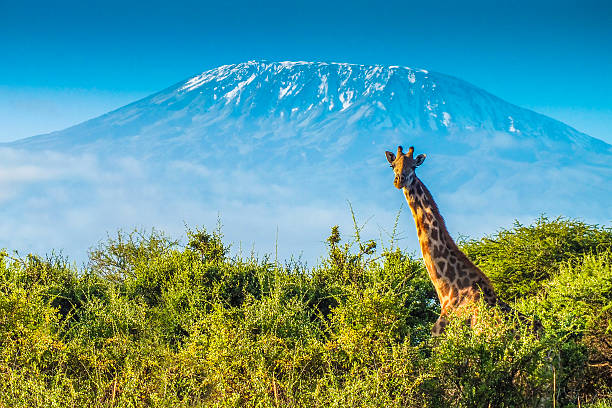
Climbers on Mount Kilimanjaro reach Uhuru Peak, the summit of the mountain, at an elevation of 19,341 feet (5,895 meters). This summit represents the final goal of the trek, and attaining it is a noteworthy accomplishment.
Depending on the selected route, climbers usually start their ascent from different base camps. It typically takes climbers several days of trekking to reach Uhuru Peak, during which they acclimatize to the altitude. To reach Uhuru Peak at dawn, when the views are most breathtaking and the sunrise bathes the landscape in gold, climbers often commence their last ascent to the summit late at night.
Climbers who reach Uhuru Peak experience a deep sense of achievement and bond with nature. The elevation and magnificence of this peak result in an unforgettable experience that numerous individuals characterize as transformative.
How does Kilimanjaro’s elevation measure up against that of other African mountains?
With an elevation of 19,341 feet (5,895 meters), Mount Kilimanjaro ranks as the highest mountain in Africa. Mount Kenya, the second highest, has an elevation of 17,057 feet (5,199 meters), which means Kilimanjaro is over 2,200 feet (670 meters) taller. Kilimanjaro’s status as the continent’s tallest mountain is accentuated by this considerable elevation disparity.
Kilimanjaro is distinctive not only because of its elevation but also because it is a freestanding mountain; it ascends sharply from the landscape around it and is not part of any mountain range. This feature adds to its remarkable look and contributes to its popularity among climbers and tourists.
The towering height and prominence of Kilimanjaro make it a renowned symbol of Tanzania, frequently represented in artworks and various media. Its majesty and challenge still motivate climbers, establishing it as a primary site for adventure tourism in Africa.
How tall is Uhuru Peak, and what makes it important?
At an elevation of 19,341 feet (5,895 meters), Uhuru Peak marks the summit of Mount Kilimanjaro. For climbers, this summit is of immense importance, as it embodies the pinnacle of their journey. The term “Uhuru,” which translates to “freedom” in Swahili, represents the liberation and victory experienced by those who attain the summit.
Uhuru Peak is important not only because of its elevation, but also because it provides climbers with stunning panoramic vistas of the nearby terrain, such as the expansive Tanzanian plains and the adjacent peaks of the Kilimanjaro range. Often, glaciers and snow envelop the summit, which stands in sharp contrast to the tropical forests at the mountain’s base.
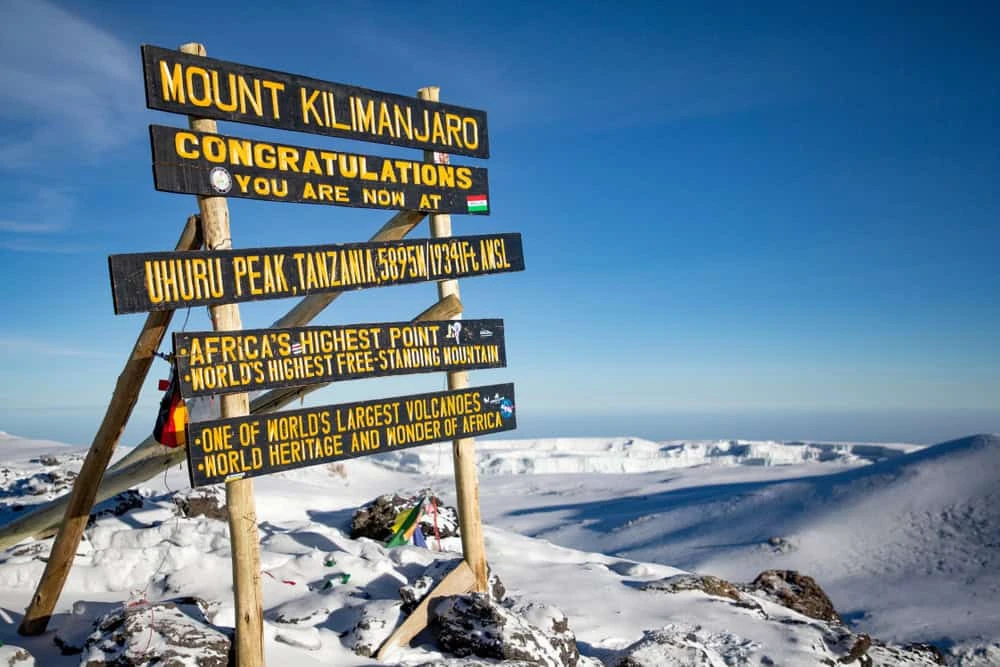
Reaching Uhuru Peak transcends the mere achievement of altitude; it offers a transformative experience that fosters a profound sense of accomplishment and connection to the natural world. The charm of the summit has turned it into a bucket-list spot for adventurers across the globe, reinforcing Kilimanjaro’s reputation as the Ultimate Kilimanjaro.
Which are the primary climbing routes on Kilimanjaro, and how do their elevations vary?
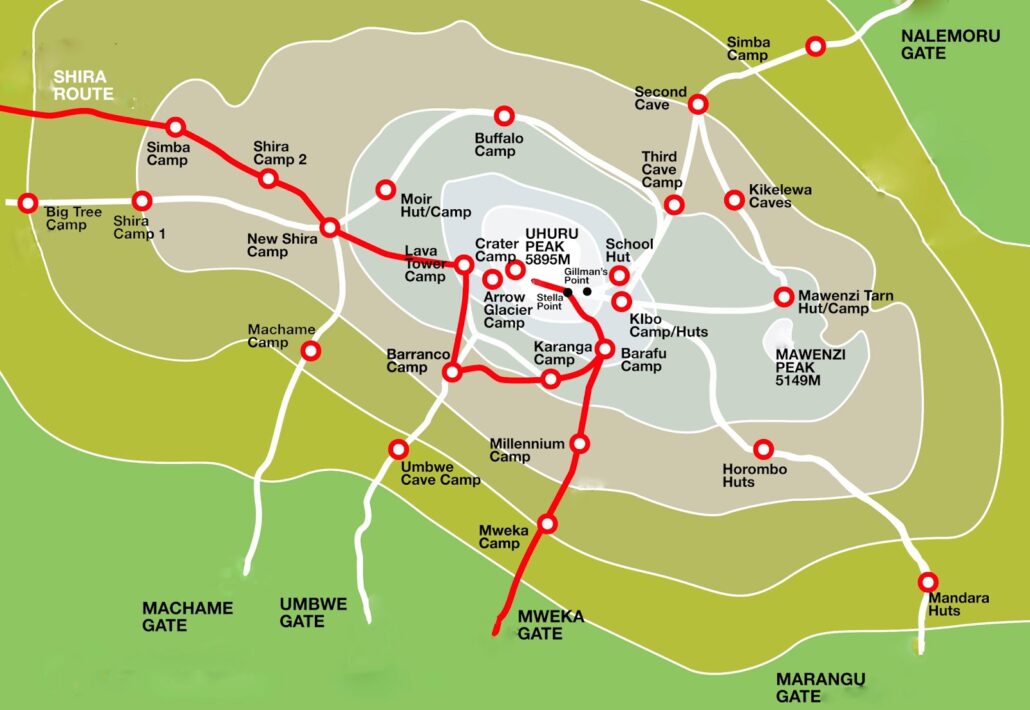
Mount Kilimanjaro has a number of well-known climbing routes, each distinguished by its own characteristics and elevation profiles. The five principal routes are as follows:
Machame-Route of kilimanjaro
Starting at 1,800 metres (5,906 feet), the Machame Route climbs to Uhuru Peak, which sits at an elevation of 5,895 metres (19,341 feet). This path is famous for its breathtaking vistas and varied ecosystems, which makes it a popular choice for hikers. It usually takes six to seven days to complete the Machame Route, which provides enough time for acclimatization. The diverse terrains, from verdant rainforests to alpine deserts, enrich the trekking experience as climbers move through various ecological zones.
lemosho Route of Kilimanjaro
The Lemosho Route begins at 2,100 metres (6,890 feet) and provides a more gradual ascent to Uhuru Peak. Lauded for its stunning views and less congested trails, this route is perfect for those looking for a more peaceful trekking experience. The elevation gain along this route is structured to support effective acclimatization, with the summit often reached in seven to nine days. Climbers can acclimatize to the altitude during this prolonged period, thereby lowering the likelihood of altitude sickness.
Rongai-Rout of kilimanjaro
Starting at an elevation of 1,950 metres (6,398 feet), the Rongai Route approaches Kilimanjaro from the north. Offering a distinctive viewpoint of the mountain, this route is not as well-known and sees fewer climbers, making it an excellent choice for those seeking a more tranquil hike. As with the others, it also results in
Uhuru Peak, though it usually takes about six to seven days to finish. The elevation gain from the starting point to the summit is considerable, requiring careful acclimatization.
Shira Route
With its starting point at 3,600 metres (11,811 feet), the Shira Route ranks among the highest starting points on Kilimanjaro. This path takes climbers to Uhuru Peak and is renowned for its striking landscapes and distinct geological characteristics. Because of its high starting elevation, climbers might need to acclimatize more attentively to prevent altitude-related problems. Spanning seven to eight days, the trek enables climbers to acclimatize to altitude variations step by step.
Marangu Route of Kilimanjaro
The Marangu Route, which is referred to as the “Coca-Cola Route,” starts at an elevation of 1,800 metres (5,906 feet) and is the sole route on Kilimanjaro that provides hut accommodations during the ascent. This route is widely regarded as the easiest, which contributes to its popularity among beginner climbers. Its acclimatization period is shorter, usually around five to six days to get to Uhuru Peak. While huts may attract those seeking a more comfortable trekking experience, the quick ascent can heighten the risk of altitude sickness.
At which elevation do the ecological zones of Kilimanjaro shift?
The height of Kilimanjaro gives rise to various ecological zones that vary with altitude. The mountain encompasses five distinct climatic zones, each with its own unique flora and fauna:
Rainforest Zone (2,600 to 3,100 meters): This verdant tropical region at the base is characterized by thick plant growth and a diverse array of fauna, such as monkeys and birds.
Heath Zone (3,100 to 4,000 meters): As climbers make their way up, the surroundings transition to heath and moorland, home to giant heathers and distinct plant species.
Moorland Zone (4,000 to 4,500 meters): This zone features alpine plants and iconic species such as lobelia and senecio.
Alpine Desert Zone (4,500 to 5,700 meters): Above the moorland, the terrain turns severe and dry, featuring volcanic rock and limited plant life.
Arctic Zone (above 5,700 meters): The summit region is desolate, marked by ice and rock, with harsh temperatures and minimal life.
As climbers ascend, they experience transitions between these zones, marked by notable changes in temperature, vegetation, and wildlife. Climbers must comprehend these ecological zones, as each offers distinct challenges and experiences.
In what way does Kilimanjaro’s elevation influence climbing conditions?
Mount Kilimanjaro’s altitude, particularly above 2,500 meters (8,200 feet), has a major effect on climbing conditions. With elevation gain, climbers experience a drop in air pressure and oxygen levels. This can result in altitude sickness, which impacts climbers variably, irrespective of their fitness levels or experience.
Altitude sickness symptoms can vary from mild headaches and tiredness to severe nausea and breathing difficulties. To lessen these impacts, climbers are advised to acclimatize properly by giving themselves enough time to adjust to the altitude. This often requires a slow ascent and additional days on the mountain, especially on routes such as Lemosho and Machame, which allow for gradual acclimatization.
Weather conditions vary with altitude as well. Temperatures can drop significantly at higher altitudes, and climbers may face cold, wind, rain, or even snow, particularly near the summit. Being prepared for these varying conditions is crucial for a successful ascent of Kilimanjaro.
What are the physical challenges related to Kilimanjaro’s height?
Climbing Mount Kilimanjaro presents several physical challenges primarily related to its height. The trek involves long days of hiking, often up steep and uneven terrain. Climbers can expect to spend anywhere from 6 to 12 hours on the trail each day, depending on the route and pace.
The altitude poses the greatest challenge, as the reduced oxygen levels can lead to fatigue and decreased physical performance. Climbers must maintain a steady pace, listen to their bodies, and recognize when to take breaks or descend if symptoms of altitude sickness arise.
Additionally, the varying weather conditions at different elevations pose risks. Climbers may encounter rain, snow, or extreme cold, especially at higher altitudes, requiring them to be well-prepared with appropriate gear.
The combination of these physical challenges makes climbing Kilimanjaro a demanding yet rewarding experience. Those who successfully reach the summit often describe it as one of the most fulfilling accomplishments of their lives, further reinforcing Kilimanjaro’s reputation as the Ultimate Kilimanjaro.
When is the best time for Ultimate Kilimanjaro Mountain Climbing?
The best time for climbing Ultimate Kilimanjaro is during the dry seasons, which are from January to March and June to October. These months offer clearer skies, lower chances of rain, and milder temperatures, making for more pleasant trekking conditions. January and February are particularly popular for fewer crowds, while June through October sees more climbers as the weather remains stable. Planning your ascent during these months enhances the overall experience and safety.
How to get to Mount Kilimanjaro National Park for Mountain Climbing
To reach Mount Kilimanjaro National Park for climbing, most trekkers fly into Kilimanjaro International Airport (JRO), located about 45 minutes from Moshi. From Moshi, various transport options, including shuttle services, taxis, or pre-arranged transfers, can take climbers to park entrances like Machame, Lemosho, or Marangu. It’s advisable to book transport in advance, especially during peak climbing seasons, ensuring a seamless transition from the airport to the starting point of your adventure.
Why Do Many Mountaineers Trust Select Adventure Safaris for Mountain Climbing?
Many mountaineers trust select adventure safaris for climbing Kilimanjaro due to their extensive experience, knowledgeable guides, and commitment to safety. Select adventure safaris provides well-organized itineraries tailored to climber needs, ensuring proper acclimatization and a rewarding experience. Their guides are trained in first aid and altitude sickness prevention, giving clients peace of mind. Additionally, select adventure safaris emphasizes responsible tourism, supporting local communities and environmental conservation, making them a popular choice among conscious adventurers.