Facts About silverback gorillas
Facts About silverback gorillas : The largest apes in the world, silverback mountain gorillas are found in the African rainforest and are known for the remarkable silver saddle of fur that forms on the backs of mature males. For generations, scientists and nature enthusiasts have been enthralled with these gentle giants because of their extraordinary power, intricate social structures, and astonishing intelligence. However, there are several dangers to the survival of these magnificent animals that inhabit the verdant volcanic slopes of Central Africa.
We will travel through the gorilla kingdom of central Africa in this post, uncovering 12 amazing facts that provide insight into the habitat, behavior, and conservation initiatives that are being undertaken to save these amazing animals. We’ll explore the world of silverback mountain gorillas and uncover the mysteries that make them so fascinating, from their distinctive communication styles to their complex family relationships.
These twelve amazing facts about silverback gorillas will captivate you.
1. The Silverback is an Astute and Powerful Leader
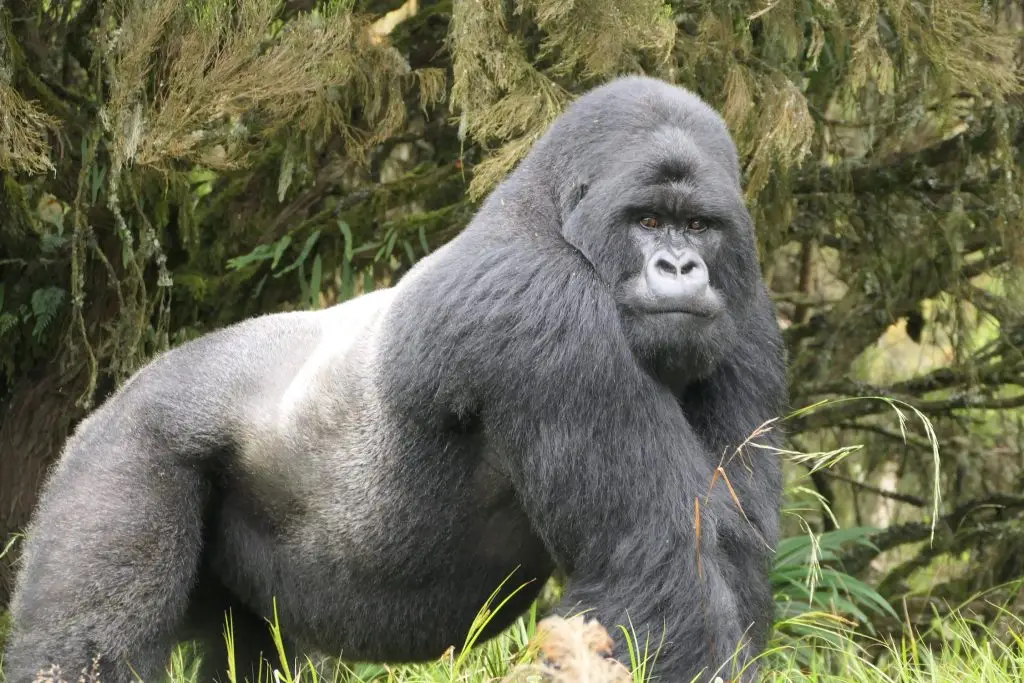
As the patriarchal head of its family troop, the male silverback gorilla, distinguished by its distinctive silver-streaked back, is a powerful leader who enjoys authority and respect. With unshakable loyalty, this beautiful African ape guides and protects its members, embodying power and wisdom. He assumes responsible for his family’s safety, deciding where the troop will travel and eat, and arbitrating disputes among the group. The troop’s survival depends on the silverback’s strength and experience, making him a capable leader.
But the silverback is more than just a leader with a lot of muscle. Silverbacks are renowned for their sweet disposition and close relationships with their family members, despite their size and power. They are essential to the upbringing and care of young gorillas, exhibiting a degree of fatherly concern that is uncommon in the animal kingdom, which makes them both loyal fathers and capable leaders.
Although they are quiet and kind, silverback gorillas fiercely defend their family 2. Although they are quiet and kind, they fiercely defend their families.
Despite being the biggest and strongest primates on the planet, silverback mountain gorillas have an unexpectedly kind and reserved personality. In the wild, these “gentle giants” hardly ever act aggressively; instead, they have contented lives of hunting and lounging with their family troop.
Those who are fortunate enough to go gorilla trekking in Rwanda or Uganda frequently see that silverbacks are initially timid and guarded near people. They can, however, exhibit unexpected affection and curiosity as they get used to a familiar presence.
Silverbacks have a calm personality, but they ferociously defend their family. If provoked or attacked, they will transform into fierce defenders, showcasing their tremendous strength and ability to repel any assault. Their innate desire to keep their troop safe and healthy is demonstrated by this protective instinct. Therefore, even if their speed may not be their most notable characteristic, silverback gorillas are incredibly fast and fierce while protecting their family.
Silverbacks are primates that value family.
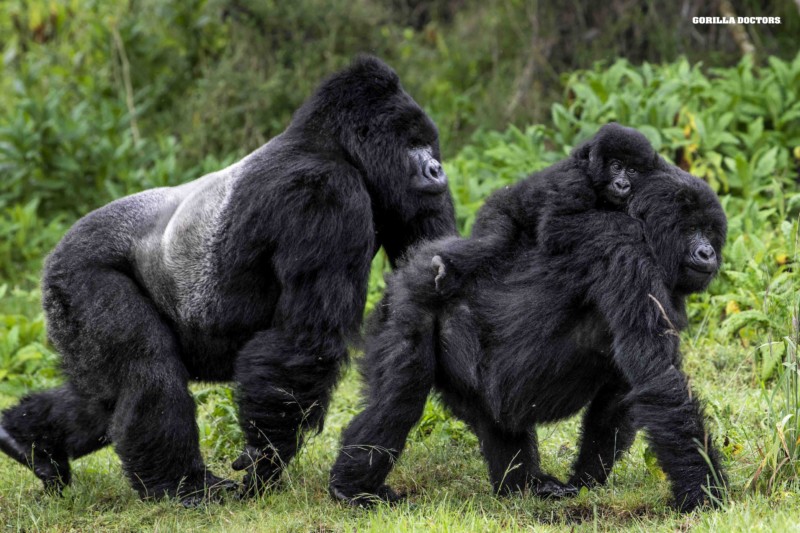
A silverback mountain gorilla and his young are resting in the bushes in the Bwindi Impenetrable Forest in Uganda.
3. Silverbacks are primates that value family.
Living in close-knit groups called troops, silverback gorillas are extremely family-oriented primates. A dominating silverback leader, numerous adult females, and their young make up these groups. These families have extremely close ties, and the silverback is an important provider and protector.
It’s fascinating to see the social dynamics in a gorilla troop. Young gorillas acquire vital life skills through play and interaction with their elders, much like human youngsters do. Taking care of babies and creating a cooperative atmosphere are frequently shared by the females. These complex interactions highlight the incredible emotional depth and social intelligence of these magnificent animals, making them even more fascinating to witness and study.

4. The nose of a silverback gorilla is as distinctive as a fingerprint.
Every mountain gorilla has distinct wrinkles over its nose, in case you were unaware. It’s accurate! Just like human fingerprints, these wrinkles are unique. When researchers started looking closely at these gorillas in the 1950s, they needed a method to distinguish between various individuals. At that moment, they realized how unique these nose prints were.
Researchers started identifying gorillas by their nose prints in order to track and study them over long periods of time. Scientists created extensive databases by painstakingly taking pictures and drawing the gorillas’ noses and documenting other physical traits. They were able to keep an eye on the gorilla population and investigate their behavior, food, and other facets of their life thanks to this priceless information, which greatly advanced our knowledge of these amazing animals.
5. The vegetarianism of silverback gorillas
Despite their enormous stature, silverback gorillas are devout vegetarians, which is one of their most amazing characteristics. They mostly eat fruits, bamboo shoots, and stems. These silverback gorillas must be resourceful in their foraging because the range of fruits they may access is restricted by the high altitude of their environment.
With a daily consumption of more than 18 kg of vegetation, adult male silverback gorillas are remarkable eaters. Because of their extraordinary power, they can easily split trees and trunks apart and reach the delicate pith inside, such as that of a banana tree.
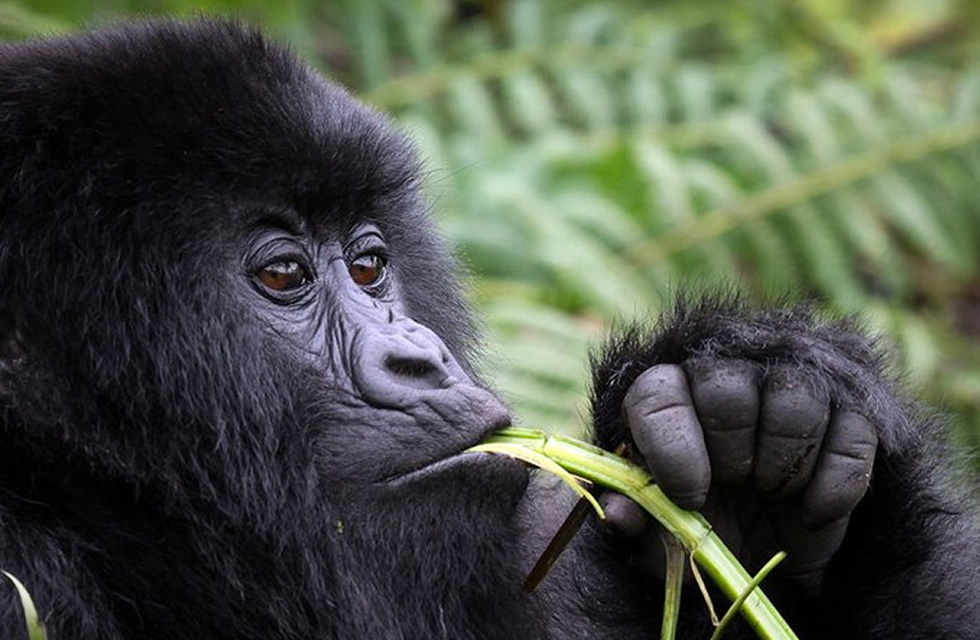
It is noteworthy that these silverback gorillas are also diligent foragers. They make sure the plant has an opportunity to rapidly regenerate by avoiding overusing a particular region for food. Among the many fascinating facts about mountain gorillas, this sustainable feeding method supports the wellbeing of their ecology.
6. They hardly ever drink water.
It may surprise you to learn that silverback gorillas hardly ever require water. Their diet of moist, succulent plants and their propensity to lick morning dew from leaves account for this intriguing fact. Their meals essentially serve as drinks, keeping them well-hydrated.
These gentle giants make sure they get the water they need from their meal by eating for up to half of the day. Their exceptional capacity to flourish in their surroundings is highlighted by this unusual adaption. The famous primatologist Dian Fossey, who has studied mountain gorillas extensively, even remarked that they “obviously dislike of rain,” underscoring their dislike of water in addition to what their food supplies.

7. A silverback’s maximum weight is 500 pounds.
Adult male silverback gorillas can reach a height of 6 feet and weigh between 136-227 kg (300-500 lbs), making them the largest and strongest primates on the planet. Females often weigh half as much as males, making them substantially smaller.
Their tremendous strength is equal to their intimidating stature. According to estimates, silverbacks can lift or throw up to 815 kg (1800 lbs), making them up to 20 times stronger than the typical adult human! Silverbacks, however, are not only strong but also remarkably nimble, with short bursts of speed of up to 25 mph.
Furthermore, their bite is more powerful than a lion’s, with an estimated force of 1,300 pounds per square inch. Their powerful bite force, when paired with their huge canines, makes them fierce protectors of their family groups.
8. To communicate, silverback gorillas beat their chests.
Silverback gorillas use their chest beats to convey a range of emotions, from excitement and playfulness to displays of aggression and dominance. These clever monkeys employ this iconic action as a sophisticated form of communication, not merely as a force demonstration.
A silverback can make a loud noise that may be heard more than a kilometer distant when it stands erect and beats its chest with cupped hands. This striking display accomplishes a number of goals. Its main purpose is to scare off male competitors and discourage any dangers. Silverbacks may also use it as a means of establishing their authority in a group and attracting possible mates.
According to recent studies, the size of the gorilla is likewise related to the pitch of its chest beat; larger males produce lower-pitched sounds. Other gorillas’ social interactions are influenced by this audio cue, which aids in determining the individual’s size and strength.
It’s interesting to note that different gorillas beat their chests differently. Some people beat their chests more frequently and for longer periods of time than others, indicating that personality or social situation may also have an impact on this habit.
Silverbacks are skilled communicators and intelligent tool users.
9. Silverbacks are skilled communicators and intelligent tool users.
Silverback gorillas are exceptionally clever in addition to having remarkable physical attributes. They may not be as inquisitive and versatile as chimpanzees, but they have shown an unexpected ability to use tools. Scientists have seen silverbacks build improvised ladders to help their young reach enticing fruits in the treetops, use branches to gauge the depth of the water before crossing streams or rivers, and even use sticks as utensils to prevent ant bites while consuming these insects.
Their communication abilities also reflect their IQ. With more than 25 different noises, silverback gorillas may express a wide range of emotions and intentions, from aggression and contentment to anguish and alarm. A gorilla named Koko even learnt to use sign language to communicate with people, learning more than 1,000 signals and comprehending more than 2,000 English words in an astounding demonstration of interspecies communication. This accomplishment adds to the list of fascinating facts about gorillas and demonstrates the remarkable cognitive powers of these amazing primates.
10. They have a 40-year lifespan.
In the wild, silverback gorillas can live for 35 to 40 years. However, they can frequently survive well above 50 years when kept safe and well in captivity. The lack of natural predators and a steady supply of food are the reasons for this longer lifespan.
Because of their enormous size and power, silverbacks are rarely threatened by other creatures in their natural habitat. One of the rare predators that can occasionally endanger gorillas is the leopard, which primarily targets younger or weaker individuals. Nonetheless, people pose the biggest danger to silverbacks. Gorillas are cruelly slaughtered for their heads, hands, and feet, which are sought after by collectors, making poaching a recurrent issue.
11. The silverback mountain gorilla is a threatened species.
These magnificent animals, silverback mountain gorillas, are in serious danger of going extinct. Their population has drastically decreased in recent decades as a result of hunting, disease outbreaks, and habitat destruction.
Due to the increase of agriculture and commercial logging, the forests that are their home are becoming smaller. Gorillas are forced to live in more difficult circumstances as a result of habitat loss. Their existence is also seriously threatened by disease outbreaks, such as the deadly Ebola outbreak that killed 95% of the mountain gorilla population in the Congo in 2002. A similar disease outbreak took out a whole gorilla population in Gabon in 1994.
Poachers, who unlawfully shoot gorillas for trophies or as exotic pets for affluent collectors, are another serious concern. Unfortunately, some gorillas are also accidentally killed when they fall into traps intended for other species.
Thankfully, conservation initiatives, such as those started by famous primatologist Dian Fossey, have brought attention to the predicament of these amazing monkeys on a global scale. Since the gorilla population has grown as a result of these efforts, the International Union for Conservation of Nature (IUCN) has upgraded the gorillas’ status from critically endangered to endangered. Even though this is a step in the right direction, more conservation work is necessary to guarantee these amazing animals’ long-term survival.
On a gorilla trekking excursion in Africa, you can see a silverback and his family in their native woods.
12. In Africa’s natural rainforests, you can go see a silverback and his family.
Take a once-in-a-lifetime trip to see the magnificence of silverback gorillas in their native African environment. Gorilla trekking trips are now available to tourists visiting the jungles of Rwanda, Uganda, and the Democratic Republic of the Congo. These multi-day trips, guided by knowledgeable local guides, provide a special chance to spend a valuable hour seeing these magnificent animals in their native habitat.
Reputable tour companies like as Select Adventure Safaris in Uganda or Kigali, Rwanda, can provide trekking permits, which are necessary for gorilla trekking excursions. The pleasure of seeing these gentle giants in their beautiful alpine home is an experience that will last a lifetime, even though the walk might be physically taxing. Make sure to investigate and reserve your permits well in advance, as costs vary by operator and country.